
Stop guessing: 6 rules for real-world web troubleshooting
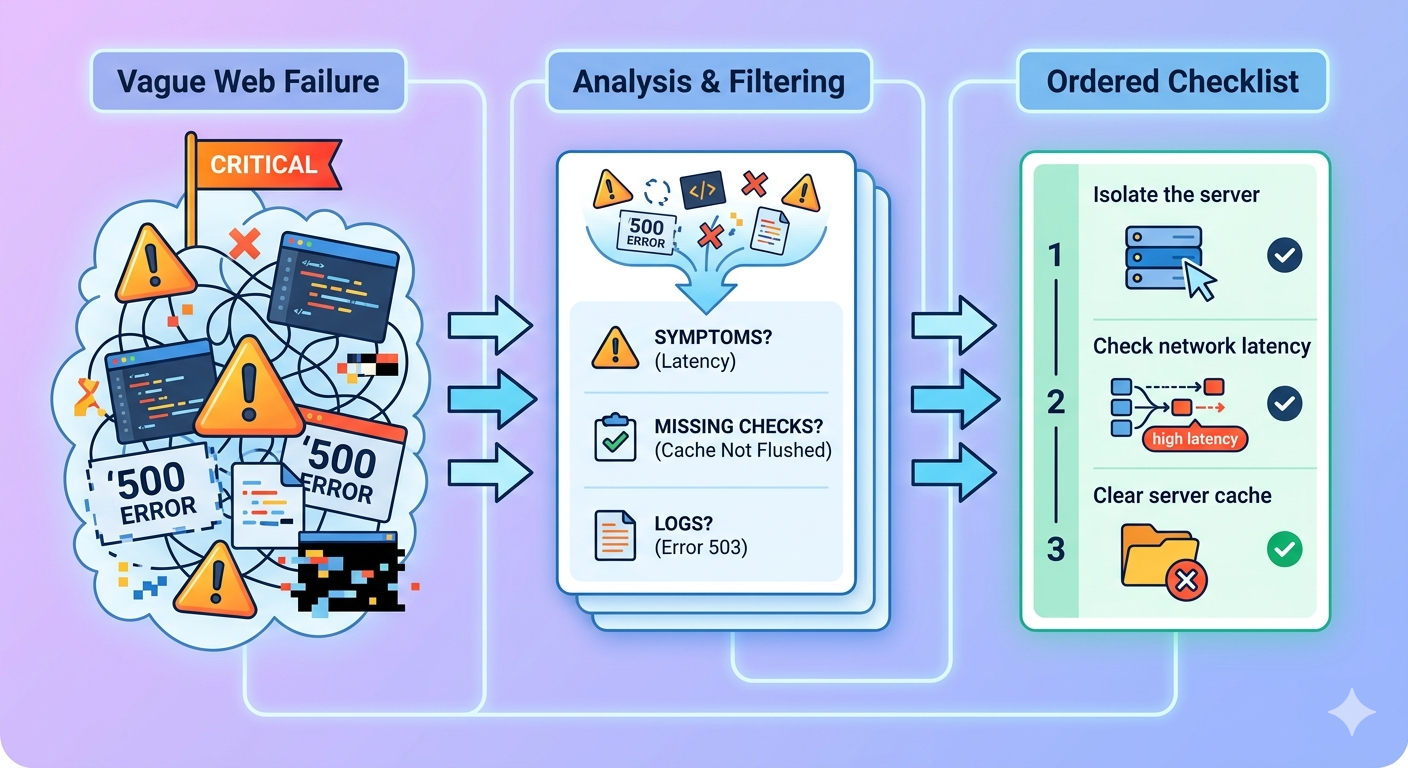
Most web troubleshooting gets slower because every incident starts from scratch. A page breaks, a redirect loops, an asset disappears, or indexing stalls, and the response is still “let’s check random things until something works.”
If you want recovery speed that improves over time, you need a small baseline first. These six rules are the first layer.
Read the operating unit first if you want the full frame for this blog: real-world web troubleshooting unit.
1. Symptoms and causes should stay separate
The first mistake is treating the visible symptom as the cause. A 404 can be a path issue, a build omission, a wrong publish root, or a redirect side effect.
Write down the symptom first, and only then list candidate causes. That alone makes the next check faster.
2. The first three checks should already be fixed
Every recurring incident type should have a stable first-response order. For many web issues that means checking the deployed path, the generated output, and the live response before anything else.
Example: if an image is missing, confirm the generated file, the published URL, and the page source before changing templates.
3. Logs are secondary until the surface is verified
Operators often dive into logs too early. But many failures are visible from the outside first: wrong URL, missing file, stale cache, bad redirect chain.
Surface verification should come before deeper backend speculation.
4. Asset and path assumptions need a rule
Broken assets often come from quiet assumptions about root paths, locale prefixes, generated file names, or public directories. If those rules are not written down, the same break repeats.
Example: if one image works locally but fails in production, the first checklist should already tell you whether to compare the generated file name, the public URL, and the locale prefix before touching templates again.
5. Redirect logic should be checked as a system
Many web issues are not content issues but routing issues. Redirects, canonical rules, locale routing, trailing slashes, and deployment hostnames can distort what the user actually receives.
Example: if `/blog/foo` redirects correctly but `/ko/blog/foo` or the canonical target still breaks, the issue is already larger than one rewrite line. Test the whole request path, not one rule in isolation.
6. Every fix should leave one prevention note
A solved issue that leaves no rule behind is only temporary progress. Each incident should end with one note about what to lock next: a checklist item, a naming rule, a build assertion, or a routing convention.
What to lock first
Start by fixing one response order for the incidents you see most often. If the same web issue appears twice, it should already have a named first-check sequence by the third time.
Today, lock one symptom template, one first-response checklist, and one prevention note format. Those three rules are enough to stop most troubleshooting from collapsing back into guesswork.